
Trex vs. Pressure-Treated Wood vs. Cedar Decking: What’s Best for Your Home?
If you’re planning a new deck in eastern Pennsylvania, one of the biggest decisions you’ll face is choosing the right material.
Should you go with composite decking such as Trex, traditional pressure-treated wood, or natural cedar?
Each option has its place, but in the Mid-Atlantic climate, some clearly outperform others depending on your priorities.
This guide breaks it all down in simple terms so you can make the best decision for your home, your budget, and your lifestyle.
Quick Answer: What’s the Best Decking Material?
- Best overall (low maintenance + long-term value): Trex composite decking
- Best for lowest upfront cost: Pressure-treated wood
- Best for natural wood look: Cedar
For most homeowners in Bucks County, Lehigh County, and surrounding areas, Trex decking is usually the smartest long-term investment because it requires far less maintenance and holds up better in our climate.
Why Your Local Climate Matters
In eastern Pennsylvania, your deck has to handle:
- Humid summers
- Heavy rain throughout the year
- Snow and ice in winter
- Freeze-thaw cycles
That combination is tough on traditional wood decks. Moisture, temperature swings, and UV exposure all accelerate wear and tear.
That’s why choosing the right material isn’t just about looks, it’s about how your deck will perform 10-25 years from now.
Trex Composite Decking (Best Overall Performance)
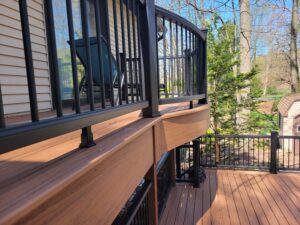
What it is:
Trex is a composite decking made from recycled materials with a protective outer shell.
Why homeowners choose it:
- No staining or sealing required
- Resistant to rot, splintering, and insects
- Long warranties (25–50 years depending on product line)
- Consistent color and appearance
Maintenance:
Just occasional cleaning—no sanding, staining, or painting.
Downsides:
- Higher upfront cost
- Can get warm in direct sunlight (lighter colors help)
Best for:
Homeowners who want:
- A “build it and enjoy it” deck
- Minimal upkeep
- Long-term value and predictable costs
Pressure-Treated Wood (Best Budget Option
What it is:
Wood infused with preservatives to resist rot and insects.
Why homeowners choose it:
- Lowest upfront cost
- Widely available
- Strong and reliable for framing
Maintenance:
High:
- Needs sealing or staining every 1-2 years
- Prone to cracking, warping, and splintering
Lifespan:
Typically 15-30 years, depending on maintenance and conditions
Downsides:
- Ongoing maintenance costs add up
- Appearance fades without regular upkeep
Best for:
Homeowners who:
- Need the lowest initial price
- Don’t mind regular maintenance
Cedar Decking (Best Natural Look)
What it is:
A naturally durable wood known for its beauty and resistance to decay.
Why homeowners choose it:
- Rich, natural wood appearance
- More stable than pressure-treated wood
- Naturally resistant to insects and rot
Maintenance:
Moderate to high:
- Needs cleaning and periodic staining
- Will turn gray over time if left untreated
Lifespan:
Around 15-25 years depending on care
Downsides:
- More expensive than pressure-treated wood
- Still requires maintenance to keep its look
Best for:
Homeowners who:
- Love the natural wood aesthetic
- Are willing to maintain it
Cost Comparison (What You’ll Really Spend)
Here’s the part most homeowners miss:
The cheapest deck upfront is often the most expensive over time.
Upfront cost (materials only)
- Pressure-treated: Lowest
- Trex: Mid-range
- Cedar: Mid to high
Long-term cost (25 years)
- Trex: Most predictable and often lowest overall
- Pressure-treated: Higher due to maintenance + possible replacement
- Cedar: Higher than expected due to refinishing
Trex typically wins long-term because it eliminates recurring maintenance costs like staining and repairs.
Maintenance Reality (What Your Weekends Look Like)
- Trex: Occasional cleaning
- Pressure-treated: Regular staining, repairs, and upkeep
- Cedar: Cleaning + refinishing every few years
If you don’t want to spend your weekends maintaining your deck, composite is the clear winner.
What Most Homeowners in Our Area Choose
For homes in Bucks County, Lehigh Valley, and surrounding areas:
- Trex decking + pressure-treated framing is the most popular combination
- It offers the best balance of durability, performance, and value
This approach gives you:
- A strong structural foundation
- A low-maintenance, long-lasting surface
Final Recommendation
Choosing the right decking material comes down to one simple question:
Do you want to save money now, or save time and money over the life of your deck?
- Choose pressure-treated wood if budget is your top priority
- Choose cedar if you love natural wood and don’t mind upkeep
- Choose Trex if you want the best long-term experience with minimal maintenance
For most homeowners in our region, Trex is the smarter investment, especially when installed by an experienced contractor who understands how to build for our climate.
Thinking About Building a Deck?
If you’re considering a new deck or replacing an old one, the best next step is to talk through your options based on your home, budget, and goals.
A well-designed deck isn’t just about materials—it’s about how everything is built together to last.
Contact Ben Blackman Decks for a free consultation!